martes, 20 de octubre de 2009

Human Remains

Director: Jay Rosenblatt

http://www.canyoncinema.com/R/Rosenblatt_HumanRemains.JPG

Mussolini. Hitler. Stalin. Mao. Franco.

http://www.atin.org/images/zamanhatti/1910_1919/Benito_Mussolini.jpghttp://www.alu.ua.es/t/tmf/HITLER.jpghttp://weblogs.clarin.com/detrasdeltelon/archives/stalin.jpghttp://courses.missouristate.edu/Dennishickey/mao.gifhttp://3.bp.blogspot.com/_3siQYZ433X4/SLMkICf1QZI/AAAAAAAABs4/0mw8vsvdO0Q/S410/francisco-franco.jpg

Bolado siempre dice que "Nomen est Omen". Lo ha repetido tanto que he terminado por memorizarlo. Al ver este documental y enterarme de que Mussolini fue nombrado Benito en honor a Benito Juárez no pude evitar relacionarlo. A pesar de las evidentes diferencias que existen entre ambos personajes (ya que dudo mucho que Mussolini hubiera concordado con "el respeto al derecho ajeno es la paz"), ambos tuvieron un exacerbado gusto por el poder político. Curiosamente tuve una maestra en preparatoria que me hizo notar que en realidad Benito Juárez podía ser catalogado como dictador.

http://www.latinworld.com/wp-content/uploads/2009/05/benito_juarez_2.bmp

Hitler con sólo un testículo tenía que demostrarle al mundo que era suficientemente hombresito, sobre todo a pesar de sus problemas sexuales. Después de haber visto El Gran Dictador no puedo pensar en Hitler sin volver a esa película, en la que hacen ver a Hitler como un niño berrinchudo que pataleaba cuando las cosas no salían como él quería. Hitler compitiendo con Mussolini en los tronos. Hitler tratando de controlar a Mussolini, pero se equivocaba al tomarse la vida tan en serio. Hitler era como un niño jugando a la vida y no sabiendo perder. Comentan que Hitler vio la película unas dos o tres veces en su sala de proyección personal, ¿me pregunto si le habrá gustado? ¿si se habrá reído? hay quien dice que sí, yo no lo sé.

http://1.bp.blogspot.com/_rrr0pVfvngo/SNhIjxyzhAI/AAAAAAAAACs/uXa8kOdfcFU/s320/i_gran_dictador_i.jpg

Stalin. De los cinco es el que me resulta más antipático y detestable, en realidad no quiero hablar de él.

Mao, el tigre. El que nunca se bañaba. Cosa que me llevó a preguntarle a mi padre si alguien podía pasar toda su vida sin bañarse, respondió que sí, que el baño es más una costumbre que una necesidad. No entiendo como Mao pudo no bañarse en tantos años.

http://www.elorodelostigres.com.ar/images/tigre_agua.jpg

Franco. Hace unos meses leí la autobiografía de Buñuel, en la que retrata su experiencia durante la españa Franquista, terrible. Aunque en realidad Franco afectó mi vida de manera más cercana, pues los padres de mi padre terminaron en México gracias a él, igual que una tía de mi madre. He convivido mucho con españoles que vivieron la guerra y siempre es curioso notar como ninguno de ellos gusta de desperdiciar la comida, supongo que después de tanto tiempo comiendo patatas, yo tampoco desperdiciaría nada.

http://terresdefemmes.blogs.com/photos/uncategorized/guernica.jpg

Me encantó el documental. Es corto, ágil y con mucho sentido del humor. Las imágenes reales, la voz en off recreada que cuenta su historia desde el más allá. Excelente documental.

Moreliando

La Cuerda Floja

La cuerda floja

Sinopsis: La cuerda floja es la historia de una familia que persiste en sacar adelante un viejo y anticuado circo porque está convencida de la trascendencia de su arte.

Guión: Nuria Ibáñez

Producción: Elsa Reyes

Compañía productora: Zensky Cine

Dirección de fotografía: Dariela Ludlow

Edición: Aina Calleja

Sonido: Ana García

Género: Documental

Mi película favorita del festival. Gran fotografía, gran diseño sonoro. Empatizas con los personajes, los quieres a pesar de sus errores. No busca compasión. La cámara pareciera no formar parte del documental, facilmente se podría confundir con una ficción -es un gran ejemplo de lo borrosa de la linea divisora. En general creo que vale la pena y la recomiendo ampliamente.


Pandora´s Box - Yesim Ustaoglu

Pandora’s Box


Sinopsis:

La historia de una familia desunida. Cuando los hermanos reciben la noticia de la desaparición de su anciana madre, regresan a su pequeña ciudad natal para buscarla. Lo que empieza como un inoportuno viaje para encontrar a su madre se convertirá en un viaje de autodescubrimiento.

Director: Yesim Ustaoglu

Reparto: Tsilla Chelton, Derya Alabora, Onur Unsal, Övül Avkiran, Osamn Sonant

Guión: Yesim Ustaoglu, Selma Kaygusuz

Producción: Yesim Ustaoglu, Muhammet Çakiral, Serkan Çakarer, Behrooz Hashemian, Setareh Farsi, Natacha Devillers, Catherine Burniaux, Michael Weber, Tobias Pausinger, Stromboli Pictures, Visions Sud Est

Compañía productora: Ustaoglu Film Yapim, Les Petites Lumieres, The Match Factory, Silkroad Production

Dirección de fotografía: Jacques Besse

Edición: Franck Nakache

Dirección de arte: H.F. Farsi, Elif Tasçioglu, Serdar Yilmaz

Sonido: Bernd von Bassewitz

Música: Jean-Pierre Mas

El segundo lugar. Es muy tierna y humanista, aunque de repente se siente demasiado larga, tal vez, aunque a mí me gusta el ritmo que maneja. Me gustó mucho y también la recomiendo.


Whisper in the Wind - Shane Stanley

Whisper with the Wind

SINOPSIS

Mam Baldar, el tío con alas, es un cartero singular quien, por muchos años, ha viajado a través de los pueblos montañosos del Kurdistan Iraquí, grabando y transmitiendo los mensajes de las personas. Un día, un comandante le pide que haga una grabación del primer llanto de su hijo recién nacido. Mam sale en búsqueda del pueblo del comandante y, una vez ahí, es informado que todos los niños del área, al igual que la esposa en cinta del comandante, han sido evacuados a un valle lejano. Mam se enrumba inmediatamente hacia el valle.

FICHA TÉCNICA

Director: Shahram Alidi
País: Irak, Irán
Formato: 35 mm – COLOR
Año: 2009
Duración: 77 minutos
Idioma original: Kurdu
Guión:Shahram Alidi
Dirección de fotografía: Touraj Aslani
Edición: Hayedeh Safiyari
Sonido: Asghar Abgoun
Dirección artística: Shahram Alidi
Producción: Gobierno Regional de Kurdistan / Ministerio de Cultura, Shahram Alidi
Intérpretes: Omar Chawshin, Maryam Boubani, Fakher Mohammad Barzani, Valid Marouf Jarou, Moharam Hossein Ghader, Bistoun Ali Ghader

Excelente foto y diseño sonoro, gran propuesta plástica y cinematográfica. A mí no me terminó de convencer la auto-conmiseración que derrama la peli, creo que se esfuerza demasiado por intentar manipularte a sentir lastima por la situación que están viviendo en esa zona y a mí eso me molestó. Aunque la pongo en mi número tres porque creo que fue la de mejor factura, realmente extraordinaria.


Helen - Joe Lawlor & Christine Molloy

Watch clips from Helen

An 18 year old girl called Joy has gone missing. Another girl called Helen is a few weeks away from leaving her care home. Helen is asked to play Joy in a police reconstruction that will retrace Joys last known movements. Joy had everything. A loving family, a boyfriend, a bright future. Helen, parentless, has lived in institutions all her life and has never been close to anyone. Gradually Helen begins to immerse herself into the role, visiting the people and places that Joy knew; quietly and carefully insinuating her way into the lost girl’s life. But is Helen trying to find out what happened to Joy that day, or is she searching for her own identity?

Format:
35mm
Year of Production: 2008
Running Time: 79 mins
Directors: Christine Molloy, Joe Lawlor
Producer: Joe Lawlor
Editor: Christine Molloy
Screenwriters: Christine Molloy, Joe Lawlor
Director of Photography: Ole Birkeland
Sound: Simon Gillman
Music: Dennis McNulty
Principal Cast: Annie Townsend, Sandie Malia, Dennis Jobling, Sonia Saville, Danny Groenland

Me iba gustando mucho hasta el final en el que creo que no concluye nada, al final no termine de definir que pensaba de ella, creo que la debería de volver a ver, tal vez fui yo la que no la entendí. no sé.

* Las otras pelis que vi: Chamaco y Taking Woodstock bastante malonas y Redención está para huir de ella, creo que se encuentra en el top 10 de las peores películas que he visto.


lunes, 19 de octubre de 2009

Experimentos

La Ola:


Excepto por el último minuto creo que es una gran peli.


Das Experiment:


Excelente film.


Milgram Experiment:


No sé que dicen estos experimentos de nosotros como raza humana... tal vez que no somos tan superiores a los animales como pensábamos, tal vez no hemos "evolucionado" tanto como se nos hace creer. Pero si uno se detiene por unos instantes a refleccionar, lo curioso es sorprenderse ante semejantes resultados. Hace no demasiado tiempo los romanos destrozaban seres humanos por diversión en pleno coliseo. Lo curioso es que ahora se mitifica la muerte y se prohibe el asesinato en nombre de una libertad intrínseca al ser humano. Vaya, no es que apoye el asesinato, simplemente cuestiono lo condicionados que estamos a mirarlo mal... se le puede achacar a la religión, a la sociedad, a la cultura, a la familia, o a lo que uno quiera, pero al final, Marx tiene mucha razón cuando sostiene que nada estaba ahí antes de que el ser humano llegara, ni el capitalismo, ni la religión, ni la supuesta libertad.

domingo, 18 de octubre de 2009

Nuit et Brouillard


Título Original: Nuit et Brouillard
Año: 1955

Duración: 32 min.

País: Francia

Director: Alain Resnais
Guión: Jean Cayrol

Música: Hans Eisler

Fotografía: Ghislain Cloquet, Sacha Vierny

Narrador: Jean Ferrat
Productora: Cocinor / Cosmo-Films / Argos Films


"There is a dual meaning behind the title of Alain Resnais' eviscerating holocaust documentary, Night and Fog: a reference to the arrival of interned prisoners into concentration camps under the cloak of darkness, and the subconscious suppression of knowledge and culpability for the resulting horror of the committed atrocities. Arguably one of the finest documentaries ever captured on film, Night and Fog opens with the fluid, horizontal tracking of an idyllic, seemingly impressionistic, barren countryside. But this is no ordinary remote open field. It is 1955, and this is postwar Poland, the site: Auschwitz. Using highly unsettling, archival footage recorded during postwar liberation contrasted against the stillness of the modern-day landscape, Resnais creates a powerful, haunting chronicle of cruelty, dehumanization, and denial of personal responsibility. Night and Fog is an examination of repressed memory. Night and Fog is a scathing indictment of the conscious, deliberate obscuration of truth - an oppressive truth with moral and universal repercussions. In 1955, ten years after the end of World War II, the deflection of accountability are reflected in the Nuremberg trials, a defiance of personal guilt tempered by cowardice, as the narrator (Jean Cayrol), a concentration camp survivor, asks the fundamental question: Who is responsible? Even today, at the turn of the century, it is still a relevant question that is met with uncomfortable silence. "


On December 7, 1941, Hitler issued Nacht und Nebel, the Night and Fog Decree.

This decree replaced the unsuccessful Nazi policy of taking hostages to undermine underground activities. Suspected underground agents and others would now vanish without a trace into the night and fog.

SS Reichsführer Himmler issued the following instructions to the Gestapo.

"After lengthy consideration, it is the will of the Führer that the measures taken against those who are guilty of offenses against the Reich or against the occupation forces in occupied areas should be altered. The Führer is of the opinion that in such cases penal servitude or even a hard labor sentence for life will be regarded as a sign of weakness. An effective and lasting deterrent can be achieved only by the death penalty or by taking measures which will leave the family and the population uncertain as to the fate of the offender. Deportation to Germany serves this purpose."

Field Marshall Keitel issued a letter stating:

"Efficient and enduring intimidation can only be achieved either by capital punishment or by measures by which the relatives of the criminals do not know the fate of the criminal. The prisoners are, in future, to be transported to Germany secretly, and further treatment of the offenders will take place here; these measures will have a deterrent effect because - A. The prisoners will vanish without a trace. B. No information may be given as to their whereabouts or their fate."

The victims were mostly from France, Belgium and Holland. They were usually arrested in the middle of the night and quickly taken to prisons hundreds of miles away for questioning and torture, eventually arriving at the concentration camps of Natzweiler or Gross-Rosen, if they survived.

FUENTES:
  • Film Affinity. Noche y Niebla. http://www.filmaffinity.com/es/film133039.html
  • Strictly Film School. Alain Resnais. http://www.filmref.com/directors/dirpages/resnais.html
  • The History Place: World War II in Europe. The Night and Fog Decree. http://www.historyplace.com/worldwar2/timeline/nacht.htm

El Especialista


Evil is never "radical,"... it is only extreme, and... it possesses neither depth nor any demonic dimension... It is "thought- defying"... because thought tries to reach some­ depth, to go to the roots, and the moment it concerns itself with evil, it is frustrated because there is nothing. That is its "banality."
—Hannah Arendt, 1964 ­


FICHA TÉCNICA
Título Original:
Un spécialiste, portrait d'un criminel moderne Año: 1999 Director: Eyal Sivan
País: Israel, Francia, Alemania, Austria, Bélgica


"After witnessing hundreds of ordinary people submit to authority in our own experiments, I must conclude that Arendt's conception of the banality of evil comes closer to the truth than one might dare imagine…: ordinary people, simply doing their jobs, and without any particular hostility on their part, can become agents in a terrible destructive process."
-Milgram


[Baudelaire] is no more than a marionette whose strings are being manipulated... At bottom it matters very little whether he attributes his actions to the Devil or to Hysteria; the essential [thing] is that he is not their cause but their victim. After that, we notice that he has, as usual, left the door open. He doesn't believe in the Devil.
-Sartre


Es cobarde pensar que tan sólo se seguían órdenes. Es increible aceptar que la muerte de millones de seres humanos estuviera a cargo de personas tan débiles y tan cobardes. Cuando se desmitifica el mal uno queda sintiéndose ridículo. ¿Cómo es posible que no hayamos sido capaces de enfrantarnos a semjante "pasguato"? ¿En qué momento fui más debil yo que él? ¿Qué sucedió con la ley del más fuerte, que regía la naturaleza? Vaya, al final ¿qué nos enseña esto sobre hacer el mal? ¿en dónde está el mérito? ¿por qué sigue siendo tan admirado y estando tan idealizado? Un animal es "malo" o hace daño cuando tiene miedo, supongo que es igual con el ser humano y mientras más miedoso se es, más factible es ser malo y una persona miedosa que es incapaz de controlar su miedo y que se deja vencer por este, es por definición, una persona débil y cobarde. Pero sigue permaneciendo la paradoja ¿cómo le hace una persona tan débil para vencer? No lo sé. Pero no quitaré el dedo del renglón.


La organización Shin Bet (Servicio de Seguridad Interior israelí) junto a la organización Mossad (Servicio de Inteligencia Israelí) dieron a conocer nuevos detalles de lo que fue el secuestro del criminal nazi Adolf Eichmann en Argentina hace varias décadas.


En el sitio de la organización salen publicados detalles, fotografías y mapas hasta ahora no publicados. La información publicada dice que la operación de secuestro se llevó a cabo en cinco etapas.

El primer paso es llamado “Primera etapa para juntar información para identificar su identidad y su dirección, y la información que sugiera que Ricardo Clement es Adolf Eichmann”.

El segundo: “Etapa de búsqueda de información hacia la operación, llegada de la célula de acción a Argentina y programación en el campo y para la traída hacia Israel.

El tercer paso es llamado “Etapa para llevara a cabo el secuestro”.

El cuarto paso es llamado “Retener a Eichman en lugar seguro y transferirlo hacia avión de ´El Al´ que viaje rumbo a Israel”.

El último paso es llamado “Etapa de juicio, Juicio que al final dictamina la pena de muerte”.

Según la información ya en 1959 llegaron a Argentina agentes del Mossad que comenzaron a juntar información y preparar detalles de la operación que se llevaría a cabo en 1960 para secuestrar y traer a Eichmann a juicio en Israel por asesinar a millones de judíos durante el Holocausto.

La información que recibió el Mossad de Fritz Bauer, un doctor judío y fiscal del estado de Hessen en Alemania, fue al artífice para que Isser Harel y sus hombres lograran con éxito secuestrar a Eichmann y llevarlo a juicio en Israel.


Karl Adolf Eichmann:

Nació en Solingen, Alemania, el 19 de marzo de 1906 y murió en Jerusalén, Israel, el 1 de junio de 1962. Teniente Coronel de la SS Nazi. Responsable directo de la solución Final, principalmente en Polonia, y los transportes de deportados a los campos de concentración alemana durante la Segunda Guerra Mundial.


"Larga vida a Alemania. Larga vida a Austria. Larga vida a Argentina. Estos son los países con los que más me identifico y nunca los voy a olvidar. Tuve que obedecer las reglas de la guerra y las de mi bandera. Estoy listo."

(Últimas palabras de Eichmann)


http://www.educima.com/estrella-de-david-t14231.jpg

FUENTES:
  • Cabinet. The De-demonization of Evil. Ulrich Baer. http://www.cabinetmagazine.org/issues/5/dedemonization.php
  • Luz Lex - Siglo XXI. Holocausto: Los Nazis en Misiones. http://ius-lex-xxi.blogspot.com/2009/04/holocausto-los-nazis-en-misiones-por-la.html
  • Sinépisi: Conetando Ideas. http://www.sinepsis.com/2009/10/eichmann-dijo-eran-judios.html

domingo, 4 de octubre de 2009

Gimme Shelter


Oh, a storm is threatning
My very life today
If I dont get some shelter
Oh yeah, Im gonna fade away
War, children, its just a shot away
Its just a shot away
War, children, its just a shot away
Its just a shot away


Ooh, see the fire is sweepin
Our very street today
Burns like a red coal carpet
Mad bull lost its way

War, children, its just a shot away
Its just a shot away
War, children, its just a shot away
Its just a shot away


Rape, murder!
Its just a shot away

Rape, murder!
Its just a shot away

Rape, murder!
Its just a shot away

The floods is threatning
My very life today
Gimme, gimme shelter
Or Im gonna fade away

War, children, its just a shot away
Its just a shot away
I tell you love, sister, its just a kiss away
Its just a kiss away
Kiss away, kiss away


Directed by David Maysles, Albert Maysles and Charlotte Zwerin
Filmed by the Maysles Brothers
Key Cast: Mick Jagger, Keith Richards, Mick Taylor, Charlie Watts, Bill Wyman
Uncredited Cast: Marty Balin, Melvin Belli, Dick Carter, Sam Cutler, Jerry Garcia, John Jaymes, Paul Kantner, Michael Lang, Phil Lesh, Ron Schneider, Grace Slick, Tina Turner, Bob Weir

Music Credits:

Rolling Stones: Jumping Jack Flash, (I Can’t Get No) Satisfaction, You Gotta Move, Wild Horses, Brown Sugar, Love In Vain, Honky Tonk Woman, Street Fighting Man, Sympathy For The Devil, Under My Thumb, Gimme Shelter

Ike & Tina Turner: I’ve Been Loving You Too Long
The Flying Burrito Brothers: Six Days On The Road
Jefferson Airplane: The Other Side Of This Life

(Colour, 1970) Running Time: 91 min.
Format: Original 1.33:1 Aspect
Audio: Dolby Digital and DTS 5.1 surround sound

22 cameramen, including a young George Lucas, and 14 Nagra-toting soundmen.

*Los shows del Madison de esta gira acabaron editándose en el álbum en directo Get Yer Ya-Ya’s Out!


Director/Film Editor Charlotte Zwerin has to be given credit for the film’s fascinating structure. In a flash of genius she asked members of The Stones to drop round her editing suite and check out the raw footage. They agreed, and cameras were set up to catch their reactions. Suddenly the film metamorphs from a documentary into something else, something doubly voyeuristic.
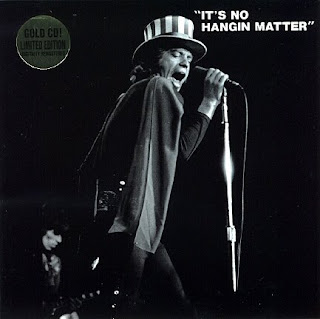
This structure, this self-referential mirror, is also the perfect way for The Stones to deflect charges that they were responsible for the Altamont concert, which not only filled the void with bad vibes but which wiped out all the good vibes of Woodstock,(four months earlier).


Uno mira el documental y no puede evitar deslumbrarse con la cámara de Albert -sencillamente brillante- con un timing tal que pareciera que existiera una puesta en escena, un previo conocimiento de lo que iba a suceder.

El título de la película: Gimme Shelter - dame refugio - haciendo alusión a la tan conocida canción homónima de la banda y la letra que pareciera estar consciente de lo que el destino deparaba, como mandada a hacer para el documental.

Los Rollings en el estudio, en concierto, pero más que un testimonio de los Rolling Stones, un testimonio de una época, de una juventud, del comienzo de conciertos másivos.

El asesinato, la escena más polémica del documental, visto desde una segunda cámara, apreciado en slow-motion. El ángel del demonio apuñalando a un chico negro que apuntaba una pistola al escenario, hacia un grupo de ángeles del demonio. Una novia destrozada que llora en brazos de un amigo mientras mira como suben a su hombre a la ambulancia. El cruel despertar después de un viaje alucinante en música y sustancias ilegales. Mick jagger mirando el video. Nosotros mirando a Mick Jagger mirarse en el concierto que veíamos unos instantes antes. El asesinato visto a través de la expresión de Jagger y en realidad con eso basta para empatizar y sentir la misma frustración: la frustración de un músico que lo único que quería era compartir su música en armonía con su público, disfrutar de la vida cantando, pero que tuvo que enfrentarse con la realidad de una juventud que no estaba preparada para el reto, para la responsabilidad que implicaba su ofrecimiento.

Gran documental y en realidad no hay mucho que agregar, basta verlo para notarlo.


David and Albert Maysles.
Pioneros del Direct Cinema.


En palabras de Albert:

For me the greatest technical innovation is the Sony PD170 because it:

1. focuses down to inches.
2. has a magnificent manual zoom.
3. is supersensitive to light.
4. an excellent zoom range especially with the addition of the Century wide-angle adapter.
5. only 3 dollars per tape.
6. extremely useful automatic focus, also manual.
7. manual and automatic exposure control.
8. single system picture and sound plus two sound inputs.
9. as you shoot, you control exposure simultaneously while observing recorded images.
10. steady device in the lens makes for a steadier picture.
11. unlike the 10minutes 16mm film camera magazine, each tape runs 40 or 60 minutes, virtually no run-outs.
12. with tape you needn’t change stock.
13. camera can be held in many positions with viewer still visible.
14. holding camera below chin, a camera person can see much more than is in the eyepiece.
15. holding camera below chin, camera person's gaze is available to subjects to assure rapport.
16. camera much lighter (only 3 or 4 pounds vs.20).
17. can vary shutter speed.
18. camera costs only around $3500; a 16mm film camera with lenses and
magazines around $100,000.
19. the zoom lens is so good you need no other lenses.
20. easy to film in tight quarters; for example, in cars.
21. totally silent.
22. less intrusive.
23. batteries are tiny (3"x 1 1/2"x 1"), weigh little, run for as much as 8 hours.
24. quality satisfactory for TV and can be blown up to 35mm.
25. all you need to shoot goes into a normal camera bag.
26. when necessary can shoot all alone.
27. no waiting a day for rushes. Results are immediately available.
28. fewer or no problems with hot or humid conditions.
29. can go straight to edit; no processing negative, workprint, or transfer to tape.
30. is a near perfect one-up on the 16mm film camera.


Hablando del documental:

Why

As a documentarian I happily place my fate and faith in reality. It is my caretaker, the provider of subjects, themes, experiences—all endowed with the power of truth and the romance of discovery. And the closer I adhere to reality the more honest and authentic my tales. After all, knowledge of the real world is exactly what we need to better understand and therefore possibly to love one another. It’s my way of making the world a better place.

How

1. Distance oneself from a point of view.
2. Love your subjects.
3. Film events, scenes, sequences; avoid interviews, narration, a host.
4. Work with the best talent.
5. Make it experiential, film experience directly, unstaged, uncontrolled.
6.There is a connection between reality and truth. Remain faithful to both.

Some Do's and Dont's

• Hold it steady.
• Use manual zoom, not the electronic.
• Read as much of the PD 170 manual as you can.
• Read book or chapter in a photography book on how to compose shots.
• Use the steady device that’s in the camera.
• Never use a tripod (exception: filming photographs, for example).
• You’ll get a steadier picture the more wide-angle the shot. In a walking shot go very wide angle.
• Hold the beginning and end of each shot. The editor will need that.
• Use no lights. The available light is more authentic.
• Learn the technique but equally important keep your eye open to watch the significant moment. Orson Welles: “The cameraman’s camera should have behind its lens the eye of a poet.”
• Remember, as a documentarian you are an observer, an author but not a director, a discoverer, not a controller.
• Don’t worry that your presence with the camera will change things. Not if you’re confident you belong there and understand that in your favor is that of the two instincts, to disclose or to keep a secret, the stronger is to disclose.
• It’s not “fly-on-the-wall”. That would be mindless. You need to establish rapport even without saying so but through eye contact and empathy.


"When we do right, no one remembers. When we do wrong, no one forgets" - Hell's Angels


Sindicato del crimen organizado fundado en California, Estados Unidos, a finales de la década de los 40's, pero que en la actualidad funciona en todo el mundo.


Requisistos para ser aceptado como miembro:
-Licencia de conducir.
-Motocicleta
-No ser pederasta
-No haber aplicado ni trabajado como guardia de prisión o policia.


No podíamos hablar de los Rolling Stones sin mencionar One plus One, mejor conocida como Sympathy for the Devil de Godard (1968).


"Probablemente, One plus One sea el registro más fiel y minucioso de la génesis de una canción. De manera paciente, casi antropológica, Jean Luc Godard registró los interminables ensayos en que los Rolling Stones dieron forma a Sympathy for the Devil, incluída después en el album Beggar's Banquet (Decca, 1968).

La idea de Godard consistía en filmar dos películas diferentes: el documental de los Stones y las fantasías militantes, y editarlas conjuntamente: un rollo de la primera, un rollo de la segunda. De ahí el título. Según Godard, "One plus One (Uno más Uno) no significa uno más uno igual dos. Significa sólo eso: One plus One..."; por lo cual el espectador esta obligado a tomar los fragmentos sueltos y, si tiene ganas e imaginación, editarlos en su propia mente, darles el significado que el film escamotea."

"The best American cameraman"
- Godard

(hablando sobre Albert Maysles.)


Arriba Patti Smith cantando el cover de Gimme Shelter.


FUENTES:
  • Rockenberg's. Gimme Shelter. http://rockenberg.wordpress.com/2008/11/08/the-rolling-stones-gimme-shelter/
  • Youtube. Patti Smith Gimme Shelter. http://www.youtube.com/watch?v=EAGmuxPAD_4
  • Youtube. Sympathy for the Devil-Godard-Stones. http://www.youtube.com/watch?v=pc3f8L7Ruuk
  • http://www.henciclopedia.org.uy/autores/Buela/oneone.htm
  • Rick Ojo McGrath. Gimme Shelter. http://www.culturecourt.com/Ajo/media/GShelter.htm
  • Wikipedia. The Free Encyclopedia. Hell's Angels. http://en.wikipedia.org/wiki/Hells_Angels
  • Henciclopedia. One plus One. http://www.henciclopedia.org.uy/autores/Buela/oneone.htm
  • Maysles Films. http://www.mayslesfilms.com/companypages/albertmaysles/note.htm